
Lithium vs Lead Acid Golf Cart Batteries – The Ultimate Comparison
If you’re shopping for a golf cart, one of the biggest decisions is the battery type. Lithium vs lead acid golf cart batteries is a hot debate, but the data clearly shows lithium as the superior choice for most owners. In this guide, we’ll compare lifespan, range, maintenance, weight, charging, cost, and real‑world performance. At Evolution Cart Depot , all our carts come standard with premium lithium batteries.
Quick Comparison Table
| Feature | Lithium (LiFePO4) | Lead‑Acid |
|---|---|---|
| Lifespan | 10‑15 years | 3‑5 years |
| Cycle life | 2,000‑3,000 cycles | 300‑500 cycles |
| Range per charge | 40‑75 miles | 20‑30 miles |
| Usable capacity | 80‑100% | 50% (to avoid damage) |
| Weight | 125‑155 lbs | 300‑400 lbs |
| Maintenance | None | Monthly watering, terminal cleaning |
| Charge time | 4‑6 hours | 6‑10 hours |
| Cold weather performance | Temporary reduction | Significant reduction |
| Upfront cost | Higher | Lower |
| 10‑year total cost | Lower | Higher |
Lifespan: Lithium Lasts 3‑5 Times Longer
Lead‑acid batteries typically need replacement every 3‑5 years. Lithium batteries last 10‑15 years under normal use. Over a decade, you’ll replace lead‑acid batteries 2‑3 times, costing $1,500‑$2,000 each time. Lithium’s higher upfront cost is quickly offset by replacement savings.
Example: Over 10 years, a lead‑acid cart may need two battery replacements ($3,000‑$4,000). Lithium requires zero replacements.
Range: Lithium Goes Twice as Far
- Lead‑acid – 20‑30 miles per charge (usable capacity limited to 50% to prevent damage).
- Lithium – 40‑75 miles depending on capacity (105Ah or 160Ah). You can safely discharge lithium to 10‑20% without harming the battery.
For daily errands, golf, or neighborhood cruising, lithium means charging once a week instead of every day.
Maintenance: Lithium is Zero Effort
Lead‑acid batteries require:
- Monthly watering – Add distilled water after charging.
- Terminal cleaning – Remove corrosion with baking soda.
- Equalization charges – Periodic high‑voltage charge.
- Ventilation – Hydrogen gas requires airflow.
Lithium batteries require none of that. No watering, no cleaning, no equalization. Just plug in the charger and drive.
Weight: Lithium is Much Lighter
A lead‑acid battery pack can weigh over 300 lbs. Lithium weighs 125‑155 lbs – about half the weight. This improves acceleration, braking, and reduces wear on suspension components.
Charging: Faster & More Convenient
| Aspect | Lithium | Lead‑Acid |
|---|---|---|
| Time (20% to 100%) | 4‑6 hours | 6‑10 hours |
| Partial charges | No problem | Ok, but less efficient |
| Leave on charger | Safe (BMS prevents overcharge) | Not recommended (can overcharge) |
| Charge after deep discharge | Fine | Requires immediate recharge to prevent sulfation |
Lithium also accepts partial charges without “memory” effects. You can top up for 30 minutes without harming the battery.
Cold Weather Performance
- Lithium – Temporary range reduction of 10‑20% below 40°F. Battery recovers when warmed. Do not charge below freezing.
- Lead‑acid – Significant range loss (30‑50%) in cold. Frozen discharged batteries can crack and fail.
Safety
Lithium iron phosphate (LiFePO4) chemistry is very stable and not prone to thermal runaway (fire). Lead‑acid batteries contain corrosive acid and emit hydrogen gas (explosive in enclosed spaces).
Total Cost of Ownership (10 Years)
Assume 5,000 miles per year, typical driving:
| Cost Factor | Lithium (105Ah) | Lead‑Acid |
|---|---|---|
| Initial battery cost | Included in cart price | Included in cart price |
| Battery replacements (10 years) | $0 | $3,000‑$4,000 |
| Maintenance (time & supplies) | $0 | $500‑$1,000 |
| Electricity (10 years) | ~$200 | ~$250 |
| Total extra cost | $0 | $3,500‑$5,250+ |
Lithium saves you thousands over the life of the cart.
Real Owner Experiences
From our review page :
“I switched from lead‑acid to lithium and will never go back. No watering, more range, and lighter. My Evolution is a dream.” – Dave, TX.
“My old lead‑acid cart needed batteries every 4 years. My Evolution lithium is going strong after 5 years with zero maintenance.” – Karen, FL.
Which One Should You Choose?
Choose Lithium if:
- You want the best long‑term value.
- You hate maintenance (watering, cleaning).
- You need longer range (40‑75 miles).
- You plan to keep the cart for many years.
- You want a lighter, more responsive cart.
Choose Lead‑Acid if:
- You have a very tight upfront budget (under $5,000 for a used cart).
- You don’t mind monthly maintenance.
- You drive less than 20 miles between charges.
- You’re buying a very old used cart.
Final Verdict
In the lithium vs lead acid golf cart batteries comparison, lithium wins in nearly every category: lifespan, range, maintenance, weight, and long‑term cost. The only advantage of lead‑acid is lower upfront cost. For most buyers, the extra investment in lithium pays off quickly through savings and convenience.
Ready to experience lithium? Browse our shop or explore financing options . For shipping details, see our shipping page .
Battery Efficiency: Why Lithium Delivers More Usable Power
When comparing lithium vs lead acid golf cart batteries, one of the most overlooked differences is battery efficiency. It’s not just about how much energy a battery stores—it’s about how much of that energy you can actually use.
Lead-acid batteries lose voltage steadily as they discharge. As the battery level drops below 50%, you may notice slower acceleration, reduced hill-climbing ability, and less overall performance. This is one reason many manufacturers recommend avoiding deep discharges with lead-acid batteries.
Lithium (LiFePO4) batteries maintain a much more consistent voltage throughout the discharge cycle. Whether the battery is at 90% or 20%, your golf cart continues to deliver strong acceleration, reliable torque, and consistent speed.
Benefits of lithium battery efficiency include:
- Consistent performance throughout the charge cycle
- Better acceleration
- Improved hill-climbing power
- Stable voltage output
- Less energy wasted as heat
- Longer driving distances
- Better motor efficiency
For drivers who regularly travel around neighbourhoods, resorts, or large properties, this consistent power makes every journey smoother and more enjoyable.
Lithium vs Lead Acid Golf Cart Batteries for Hilly Terrain
If you frequently drive on steep roads or uneven terrain, battery choice becomes even more important.
Lead-acid batteries struggle under heavy loads because voltage drops significantly when climbing hills or carrying multiple passengers. This can result in slower speeds and increased battery drain.
Lithium batteries provide instant torque and maintain power under demanding conditions, making them the preferred option for:
- Hilly neighbourhoods
- Mountain communities
- Golf courses with elevation changes
- Farms and ranches
- Campgrounds
- Large private estates
- Commercial properties
Because lithium batteries are significantly lighter than lead-acid batteries, they also reduce the overall vehicle weight, allowing the motor to work more efficiently while improving handling and braking.
Environmental Impact: Lithium vs Lead Acid Golf Cart Batteries
Many buyers are also interested in the environmental impact of their purchase. When comparing lithium vs lead acid golf cart batteries, lithium batteries offer several sustainability advantages.
Lead-acid batteries contain large amounts of lead and sulphuric acid. While they are recyclable, improper disposal can pose environmental risks. They also require more frequent replacement, resulting in additional manufacturing and recycling over the life of the golf cart.
Lithium iron phosphate (LiFePO4) batteries last much longer, reducing waste and the need for replacement batteries.
Environmental advantages of lithium include:
- Longer service life
- Fewer battery replacements
- Reduced manufacturing demand
- Lower energy consumption
- No acid spills
- No hydrogen gas emissions during normal operation
- Improved energy efficiency
For environmentally conscious buyers, lithium batteries provide a cleaner and more sustainable long-term solution.
Why Evolution Cart Depot Uses Lithium Batteries as Standard
At Evolution Cart Depot, we believe our customers deserve the best technology available. That’s why our Evolution Golf Carts come equipped with premium lithium batteries as standard rather than outdated lead-acid technology.
When you purchase an Evolution Golf Cart, you benefit from:
- Maintenance-free lithium battery technology
- Longer driving range
- Faster charging
- Reduced operating costs
- Improved reliability
- Better acceleration
- Lower overall vehicle weight
- Longer battery warranty
- Exceptional long-term value
Our goal is to provide customers with a golf cart that delivers outstanding performance from day one while minimising maintenance and ownership costs for years to come.
Explore our latest models in our Shop section or learn more about our Financing, Shipping, and Warranty options to find the right Evolution Golf Cart for your lifestyle.
Frequently Asked Questions About Lithium vs Lead Acid Golf Cart Batteries
Choosing between lithium and lead-acid batteries is one of the biggest decisions you’ll make when buying a golf cart. Below are answers to some of the most common questions to help you decide which battery technology best suits your needs.
Are lithium golf cart batteries worth the extra cost?
Yes. Although lithium batteries have a higher upfront cost, they typically last three to five times longer than lead-acid batteries while requiring virtually no maintenance. Over the life of the golf cart, most owners save thousands of dollars by avoiding battery replacements, maintenance costs, and downtime.
How long do lithium golf cart batteries last?
Premium lithium iron phosphate (LiFePO4) batteries generally last between 10 and 15 years or 2,000 to 3,000 charging cycles, depending on usage, charging habits, and operating conditions. Many owners enjoy years of reliable performance without needing a battery replacement.
Can I replace my lead-acid batteries with lithium batteries?
Yes. Many golf carts can be upgraded from lead-acid to lithium batteries. However, the conversion may require a compatible charger, battery mounting hardware, and in some cases minor electrical modifications. Purchasing a golf cart that already comes with a factory-installed lithium battery is often the simplest and most cost-effective option.
Which battery performs better in hot weather?
Both battery types can operate in warm climates, but lithium batteries generally manage heat more efficiently and maintain better performance over time. Built-in Battery Management Systems (BMS) help protect lithium batteries from overheating and optimise charging and discharging.
Do lithium batteries require special chargers?
Yes. Lithium batteries should always be charged with a charger designed for lithium battery chemistry. Evolution Golf Carts include compatible charging systems to ensure safe, efficient charging and maximum battery life.
Why More Buyers Are Choosing Lithium Golf Carts Every Year
The golf cart industry has changed dramatically over the past decade. While lead-acid batteries were once the standard, lithium technology has quickly become the preferred choice for both personal and commercial users.
More homeowners, golf communities, resorts, and businesses are choosing lithium-powered golf carts because they offer:
- Lower lifetime ownership costs
- Greater reliability
- Longer driving range
- Faster charging
- Less maintenance
- Improved energy efficiency
- Better acceleration
- Higher resale value
Manufacturers like Evolution have embraced this technology by making premium lithium batteries standard equipment on many of their models, allowing customers to enjoy the benefits from day one without paying for costly upgrades.
Why Buy a Lithium Golf Cart from Evolution Cart Depot?
At Evolution Cart Depot, we specialise in premium lithium-powered Evolution Golf Carts designed for comfort, performance, and long-term value. Every model is selected to provide customers with modern technology, dependable performance, and reduced maintenance compared with traditional lead-acid golf carts.
When you choose Evolution Cart Depot, you’ll enjoy:
- Premium lithium battery technology
- Nationwide shipping across the United States
- Flexible financing options
- Manufacturer-backed warranty coverage
- Genuine Evolution parts and accessories
- Expert customer support before and after your purchase
Whether you’re looking for a golf cart for your neighbourhood, golf course, business, resort, or recreational property, our knowledgeable team is ready to help you find the perfect model.
Continue Your Research
If you’re still comparing battery technologies or planning your next purchase, these resources may also help:
- Shop Evolution Golf Carts →
/shop/ - Golf Cart Financing →
/financing/ - Shipping Information →
/shipping/ - Warranty Coverage →
/warranty/ - Evolution LSV Golf Cart Guide →
/evolution-lsv-golf-cart-guide/ - Golf Cart Maintenance Guide →
/golf-cart-maintenance-guide/
Final Thoughts: Lithium vs Lead Acid Golf Cart Batteries
The lithium vs lead acid golf cart batteries debate has become much clearer as battery technology has advanced. While lead-acid batteries remain a budget-friendly option for older or lightly used golf carts, lithium batteries outperform them in nearly every category that matters to modern owners.
Lithium batteries deliver a longer lifespan, greater driving range, faster charging, lighter weight, improved efficiency, and virtually maintenance-free ownership. They also provide a lower total cost of ownership over the life of the vehicle, making them a smart investment for anyone planning to keep their golf cart for several years.
If you’re purchasing a new golf cart and want dependable performance, lower maintenance, and better long-term value, a lithium-powered Evolution Golf Cart is the clear choice. Browse our latest inventory, compare available models, or contact our team today to learn how a premium lithium battery can transform your driving experience.
Common Myths About Lithium vs Lead Acid Golf Cart Batteries
When researching lithium vs lead acid golf cart batteries, you’ll come across plenty of outdated information. Battery technology has evolved significantly over the last decade, and many common beliefs about lithium batteries are no longer accurate. Let’s separate fact from fiction.
Myth 1: Lithium Batteries Are Too Expensive
While lithium batteries have a higher initial purchase price, they often cost less over the life of the golf cart. Because they last much longer and require virtually no maintenance, owners avoid the repeated expense of replacing lead-acid batteries every few years.
Myth 2: Lead-Acid Batteries Are More Reliable
Lead-acid batteries have been around for decades, but age doesn’t necessarily mean better reliability. Lithium batteries deliver more consistent power, experience less performance degradation over time, and include advanced Battery Management Systems (BMS) that monitor temperature, voltage, and charging to protect the battery.
Myth 3: Lithium Batteries Are Difficult to Maintain
The opposite is true. One of the biggest advantages of lithium technology is that there is almost no routine maintenance. There is no need to:
- Add distilled water
- Clean corrosion from terminals
- Perform equalisation charging
- Check electrolyte levels
- Worry about sulphation
Simply charge the battery and enjoy your golf cart.
Myth 4: Lithium Batteries Are Unsafe
Modern LiFePO4 (Lithium Iron Phosphate) batteries are among the safest lithium battery technologies available. They are designed with multiple safety protections and are far more stable than older lithium chemistries used in some consumer electronics.
How Battery Choice Affects Golf Cart Performance
Your battery isn’t just a power source—it influences nearly every aspect of your golf cart’s performance.
Choosing lithium batteries can improve:
- Acceleration
- Maximum driving range
- Hill-climbing capability
- Steering responsiveness
- Braking performance
- Overall vehicle efficiency
- Ride comfort
- Battery longevity
Because lithium batteries weigh significantly less than lead-acid batteries, the reduced weight helps improve handling while placing less strain on the suspension, tyres, and braking system.
For drivers who frequently carry passengers or cargo, these performance improvements become even more noticeable.
Signs It’s Time to Replace Your Lead-Acid Batteries
If you currently own a lead-acid golf cart, it may be time to consider upgrading to lithium if you notice any of the following:
- Reduced driving range
- Slower acceleration
- Longer charging times
- Battery corrosion
- Frequent watering requirements
- Difficulty climbing hills
- Batteries failing to hold a full charge
- Uneven power delivery
- Swollen or leaking battery cases
Rather than replacing another set of lead-acid batteries, many owners choose to upgrade to lithium and enjoy years of maintenance-free driving.
Why Evolution Golf Carts Are Built Around Lithium Technology
Evolution Golf Carts are engineered to maximise the advantages of lithium battery technology rather than simply replacing lead-acid batteries with lithium alternatives.
The vehicle’s electrical system, motor, controller, charger, and battery management software are designed to work together for optimal performance.
This integrated design provides benefits such as:
- Improved energy efficiency
- Better battery protection
- Faster charging
- Longer component life
- More reliable performance
- Enhanced driving experience
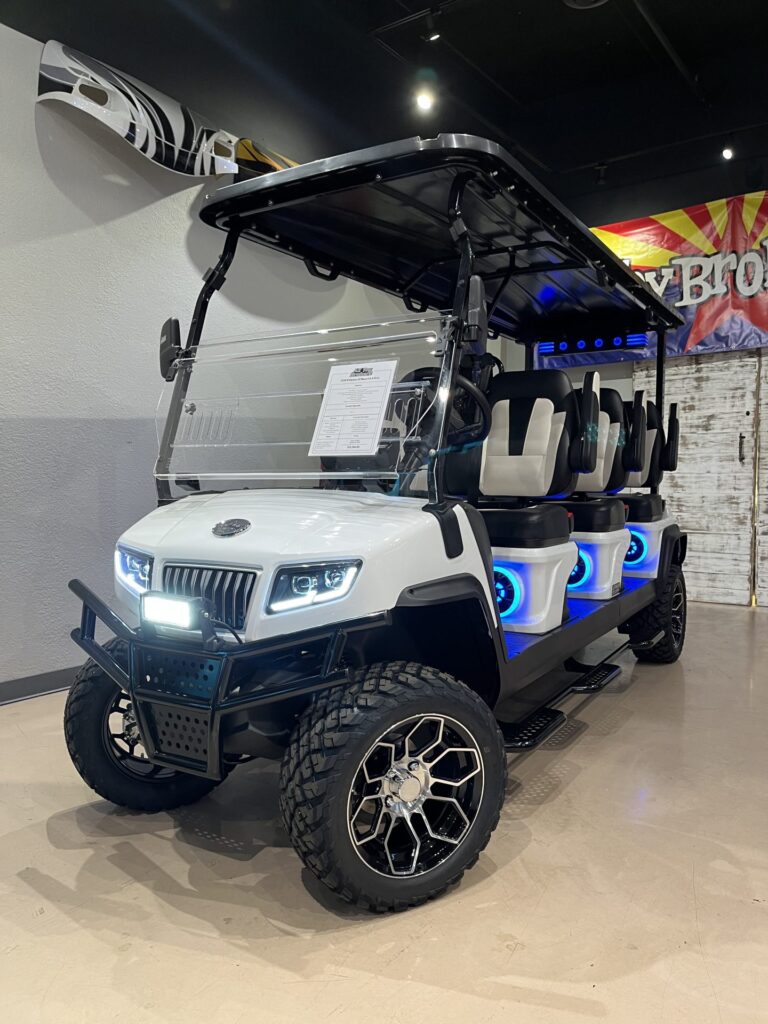
By purchasing a factory-equipped Evolution Golf Cart, owners receive a complete system that has been designed, tested, and optimised to work seamlessly together.external link
Expert Buying Tips for Choosing the Right Battery
Before purchasing your next golf cart, consider these questions:
- How many miles do you typically drive each week?
- Will you be driving on flat roads or hilly terrain?
- Do you want to minimise maintenance?
- How long do you plan to keep your golf cart?
- Is long-term value more important than the lowest purchase price?
- Will you regularly carry multiple passengers or heavy cargo?
If you answered “yes” to most of these questions, a lithium-powered golf cart is likely the better investment.
At Evolution Cart Depot, we recommend lithium-powered Evolution Golf Carts because they provide exceptional reliability, lower ownership costs, and superior everyday performance. Combined with our financing options, nationwide shipping, warranty support, and knowledgeable customer service, you’ll enjoy a premium ownership experience from purchase through years of use.
Continue Exploring:
Contact Our Team → /contact/
Shop Evolution Golf Carts → /shop/
Financing Options → /financing/
Shipping Information → /shipping/
Warranty Coverage → /warranty/

0 Comments