
Evolution Forester Ownership Guide – How to Care for Your Off‑Road Cart
Congratulations on your Evolution Forester. This Evolution Forester ownership guide will help you maintain your cart, maximize battery life, handle off‑road cleaning, and understand your warranty. Whether you use your Forester for hunting, farming, or trail riding, proper care ensures years of reliable service. At Evolution Cart Depot , we’re here to support you.
Daily & Weekly Maintenance
| Task | Frequency | Time |
|---|---|---|
| Check tire pressure | Weekly | 2 minutes |
| Inspect for loose bolts | Weekly | 5 minutes |
| Clean battery terminals | Monthly | 2 minutes |
| Wash off mud and debris | After off‑road use | 10 minutes |
| Check brake fluid level | Monthly | 2 minutes |
Proper tire pressure is critical off‑road. For trails: 15‑18 PSI. For pavement: 20‑22 PSI. Under‑inflated tires increase rolling resistance and reduce range.
Battery Care for Long Life
The Forester’s lithium battery requires very little maintenance, but following these tips will maximize its lifespan:
- Avoid deep discharges – Recharge when battery drops below 20%. Regularly running to 0% can shorten life.
- Store between 40‑60% if leaving the cart unused for a month or more.
- Use the included charger – Only use the Evolution‑supplied charger.
- Keep terminals clean – Wipe with a dry cloth if dusty.
- Avoid extreme heat – Parking in direct sun for long periods can reduce battery life. Store indoors when possible.
The battery is rated for 2,000‑3,000 cycles (10‑15 years). See our golf cart warranty for coverage details.
Off‑Road Cleaning Tips
After a muddy trail ride, clean your Forester promptly to prevent buildup that can trap moisture.
- Pressure washer – Use low pressure (under 1,500 PSI) and avoid spraying directly into electrical connectors.
- Undercarriage – Spray underneath to remove mud from suspension and skid plates.
- Seats – Wipe vinyl with mild soap and water. Avoid harsh chemicals.
- Dashboard – Use a damp cloth; don’t soak.
- Tires – Clean mud from treads to maintain traction.
Pro tip: Apply a spray‑on ceramic coating to the body to make mud slide off more easily.
Tire Care for Off‑Road Use
The 23” all‑terrain tires are durable, but they need attention:
- Rotate tires every 1,000 miles to ensure even wear.
- Check for cuts or punctures after rocky trails.
- Replace when tread depth is below 4/32” for off‑road use (6/32” recommended).
- Consider a spare tire for long remote trips.
Browse tire options in our shop .
Storage Guidelines
If you won’t use your Forester for an extended period (over a month):
- Charge battery to 40‑60% – Do not store at 100% or 0%.
- Disconnect the main battery disconnect (if equipped) or remove the negative terminal.
- Store indoors in a dry, moderate temperature location.
- Inflate tires to 25 PSI to prevent flat spots.
- Cover the cart to protect from dust.
Warranty Coverage
Your Forester is covered by:
- Lithium battery – 5‑7 years (defects and capacity loss below 70%).
- Frame – 5 years.
- Motor & controller – 3 years.
- Other electrical components – 1‑3 years.
Excluded: Normal wear items (tires, brake pads, seat upholstery), damage from abuse or accidents, modifications not approved by Evolution.
Read the full warranty on our golf cart warranty page. For claims, contact us via our contact page .
Common Owner Questions
How often should I service the Forester?
A professional inspection every 2 years is recommended (brakes, suspension bolts, wheel bearings). DIY checks monthly.
Can I leave the Forester plugged in continuously?
Yes, the BMS prevents overcharging. However, for long‑term storage, unplug and store at 40‑60%.
What should I do if an error code appears?
Refer to your owner’s manual or contact us. Most error codes are cleared by turning the key off and on.
How do I register my Forester for street legal use?
Check your local DMV. The Forester comes with a VIN and all required LSV equipment. Our contact page can advise.
Off‑Road Etiquette & Safety
- Wear seat belts at all times.
- Stay on designated trails to protect the environment.
- Carry a basic tool kit (tire plug kit, portable air compressor).
- Tell someone your route if riding alone in remote areas.
- Respect wildlife – The quiet motor can startle animals; give them space.
Owner Resources
- Owner’s manual – Provided with your cart; digital copy available upon request.
- Video tutorials – We offer how‑to videos for common tasks (changing tires, cleaning, etc.).
- Support – Contact us anytime via our contact page .
Final Thoughts
This Evolution Forester ownership guide covers the essentials to keep your cart in top shape. With proper care, your Forester will provide years of off‑road adventures with minimal maintenance. The lithium battery eliminates the most tedious chores (watering, terminal cleaning), leaving you more time to enjoy the trails.
Need parts or accessories? Browse our shop . For shipping, see our shipping page . For returns, see refund returns .
Introduction
Congratulations on purchasing—or considering—the Evolution Forester, one of the most capable electric off-road golf carts in the Evolution lineup. Designed for rugged terrain, hunting properties, farms, ranches, campgrounds, large estates, and outdoor adventures, the Forester combines lithium battery technology, durable suspension, and modern comfort features into a versatile utility vehicle.
Like any premium vehicle, proper maintenance plays an important role in keeping your Forester performing at its best. Fortunately, one of the biggest advantages of owning an Evolution golf cart is its low-maintenance lithium battery system, which eliminates many of the routine tasks associated with traditional lead-acid batteries.
Whether you’re driving wooded trails, transporting equipment around your property, or exploring backcountry roads, this Evolution Forester ownership guide will show you how to care for your cart, maximize battery life, clean it after off-road use, prepare it for seasonal storage, and understand your warranty coverage.
At Evolution Cart Depot, we’re committed to helping customers enjoy years of reliable performance. This guide combines practical maintenance advice with ownership tips that can help protect your investment and reduce unnecessary wear.
Need genuine Evolution parts or accessories? Visit our Shop to browse compatible accessories, replacement parts, and the latest Evolution golf cart models. You can also learn about our Warranty, Financing, and Shipping options if you’re planning your next Evolution purchase.
Why Proper Maintenance Matters
The Evolution Forester is engineered to withstand demanding environments, but regular maintenance is still essential.
Routine care helps:
- Extend battery life
- Improve driving range
- Reduce unexpected repairs
- Protect suspension components
- Maintain braking performance
- Improve safety
- Preserve resale value
- Keep the cart looking new
Even simple habits—such as checking tire pressure, washing away mud after trail rides, and inspecting the suspension for loose hardware—can significantly extend the life of your vehicle.
Unlike gasoline-powered utility vehicles, the Evolution Forester doesn’t require oil changes, fuel filters, spark plugs, or engine tune-ups. That means owners spend less time on maintenance and more time enjoying their vehicle.
Understanding Your Evolution Forester
Before discussing maintenance, it’s helpful to understand what makes the Forester different from a traditional golf cart.
The Evolution Forester is designed for buyers who regularly travel beyond paved paths. Its off-road-oriented design typically includes features such as:
- High ground clearance
- All-terrain tires
- Independent front suspension
- Powerful electric motor
- Lithium battery system
- Durable chassis
- LED lighting
- Premium seating
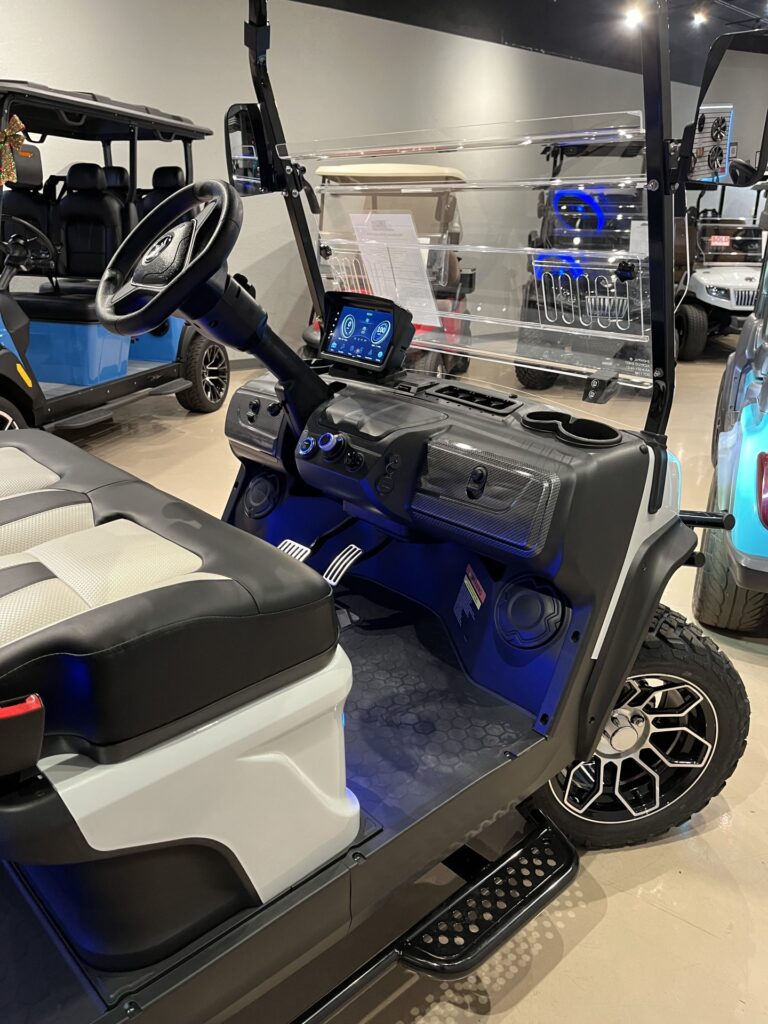
- Digital display
- Modern dashboard controls
These features allow the Forester to perform confidently on gravel roads, wooded trails, farms, ranches, hunting properties, and other challenging environments while still providing a comfortable ride.
Because many owners use the Forester in muddy, dusty, or uneven conditions, regular inspections become even more important than they would for a cart used exclusively on pavement.
Your First Week of Ownership
The first few days of ownership are the perfect time to familiarize yourself with your Evolution Forester and establish good maintenance habits.
During your first week:
- Read the owner’s manual thoroughly.
- Learn the location of the charging port, battery disconnect (if equipped), and fuse panel.
- Practice using all dashboard controls and safety features.
- Check tire pressures before your first extended ride.
- Fully charge the lithium battery using the supplied charger.
- Inspect the cart after each ride for loose fasteners, mud buildup, or debris around the suspension and wheels.
- Record your model information, serial number, and purchase documents for future warranty or service needs.
Taking these simple steps early can make ownership easier and help you spot potential issues before they become larger problems.
Daily, Weekly & Monthly Maintenance Schedule
One of the biggest advantages of owning an Evolution Forester is that routine maintenance is straightforward. Because the Forester uses a lithium battery and an electric powertrain, there are no oil changes, spark plugs, fuel filters, or engine belts to service. However, regular inspections and preventative maintenance are still essential for reliable performance—especially if your cart is used on rough trails, farms, hunting properties, or construction sites.
Following a simple maintenance schedule can help extend the life of your Evolution Forester while reducing the likelihood of unexpected repairs.
Daily Pre-Ride Inspection
Before heading out, take a few minutes to perform a quick visual inspection. This simple habit can help identify small issues before they become larger problems.
Check the Following:
- Battery charge level
- Tire condition and inflation
- Headlights and taillights
- Brake pedal feel
- Steering operation
- Horn
- Mirrors
- Windshield (if equipped)
- Seat belts
- Signs of fluid leaks or damaged wiring
If the cart has been driven off-road recently, inspect underneath for branches, rocks, or debris lodged around the suspension or drivetrain.
Weekly Maintenance Checklist
Weekly maintenance is especially important if you regularly drive on dirt roads, gravel, or muddy trails.
| Task | Recommended Frequency | Approximate Time |
|---|---|---|
| Check tire pressure | Weekly | 2–3 minutes |
| Inspect lug nuts | Weekly | 5 minutes |
| Clean exterior | Weekly | 15 minutes |
| Inspect suspension | Weekly | 10 minutes |
| Check steering components | Weekly | 5 minutes |
| Test lights and horn | Weekly | 2 minutes |
| Remove mud from undercarriage | After off-road use | 15–20 minutes |
Monthly Maintenance
Once a month, perform a more detailed inspection of your Evolution Forester.
Battery System
Although lithium batteries require far less maintenance than lead-acid batteries, you should still:
- Inspect battery cables for damage
- Check electrical connections for security
- Look for corrosion around terminals (if applicable)
- Ensure the charging port is clean and free of debris
- Confirm the charger cable is in good condition
Unlike lead-acid batteries, lithium batteries do not require watering, making ownership much simpler.
Tires
The all-terrain tires on the Evolution Forester are designed to provide traction on a variety of surfaces.
Inspect for:
- Uneven wear
- Embedded rocks
- Sidewall cuts
- Punctures
- Loose valve stems
Maintaining correct tire pressure improves:
- Battery efficiency
- Handling
- Ride comfort
- Tire lifespan
- Traction
Typical pressure ranges (always confirm with your tire manufacturer’s recommendations):
- Pavement: approximately 20–22 PSI
- Light trails: approximately 18–20 PSI
- Rough off-road terrain: approximately 15–18 PSI
Avoid running extremely low pressures unless recommended for your specific tires, as this can increase the risk of tire damage.
Brake Inspection
Reliable brakes are essential, particularly when driving on uneven or steep terrain.
Each month:
- Test braking performance
- Listen for unusual noises
- Inspect brake pads (where visible)
- Check brake fluid level if applicable
- Ensure the parking brake engages properly
If you notice reduced braking performance or unusual sounds, have the system inspected by a qualified technician before continuing to operate the cart.
Steering & Suspension Inspection
Off-road driving places additional stress on steering and suspension components.
Inspect:
- Ball joints
- Tie rods
- Bushings
- Shock absorbers
- Control arms
- Steering linkage
- Mounting bolts
Watch for:
- Excessive play in the steering wheel
- Unusual noises over bumps
- Uneven tire wear
- Pulling to one side
- Loose or damaged components
Early detection can prevent more expensive repairs later.
Wheels & Lug Nuts
After driving on rough terrain, it’s good practice to verify that wheel lug nuts remain properly tightened according to the manufacturer’s specifications.
Also inspect wheels for:
- Cracks
- Bent rims
- Deep scratches
- Impact damage from rocks or obstacles
Electrical System Check
Modern Evolution golf carts include advanced electrical components.
Monthly, test:
- Headlights
- Brake lights
- Turn signals
- Reverse lights
- Horn
- Backup camera (if equipped)
- USB charging ports
- Touchscreen display
- Bluetooth connectivity
If any electrical feature stops working, consult your owner’s manual or contact your dealer for diagnosis.
Cleaning Schedule
Keeping your Forester clean is about more than appearance. Dirt, mud, and debris can trap moisture and accelerate wear on mechanical components.
After Every Off-Road Ride
- Remove heavy mud from the undercarriage.
- Wash dirt from the suspension.
- Clean the wheel wells.
- Rinse the tires.
- Wipe down seats and dashboard.
- Inspect for sticks, vines, or rocks caught underneath.
Weekly
- Wash the exterior.
- Clean windows and windshield.
- Vacuum interior surfaces if needed.
- Clean storage compartments.
Regular cleaning also makes it easier to spot leaks, loose hardware, or damaged components.
Seasonal Maintenance
Different seasons place different demands on your golf cart.
Spring
- Check tire pressure after winter storage.
- Fully charge the battery.
- Inspect brakes.
- Test all electrical systems.
- Wash away accumulated dust.
Summer
- Avoid prolonged parking in direct sunlight where possible.
- Keep the battery within recommended operating temperatures.
- Clean dust from air vents and charging ports.
- Inspect tires more frequently if driving on hot pavement.
Fall
- Remove leaves and debris from the chassis.
- Prepare for wetter trail conditions.
- Inspect lighting as daylight hours become shorter.
Winter
- Charge the battery before storage.
- Store the cart in a dry, sheltered location.
- Keep tires properly inflated.
- Follow the battery storage recommendations in your owner’s manual.
Maintenance Record
Keeping a maintenance log helps you stay on schedule and can be useful if you ever sell the cart.
| Date | Service Performed | Mileage/Hours | Notes |
|---|---|---|---|
Recording inspections, tire rotations, and service visits creates a valuable maintenance history.
Pro Tips for Long-Term Reliability
- Wash the cart after every muddy ride.
- Keep the charging port clean and dry.
- Inspect tires before every off-road trip.
- Tighten loose hardware promptly.
- Address unusual noises early.
- Use genuine Evolution replacement parts whenever possible.
- Follow the manufacturer’s maintenance recommendations for your specific model.
With consistent care, the Evolution Forester can provide years of dependable service in demanding environments while maintaining the performance and comfort owners expect.
Daily, Weekly & Monthly Maintenance Schedule
One of the biggest advantages of owning an Evolution Forester is that routine maintenance is straightforward. Because the Forester uses a lithium battery and an electric powertrain, there are no oil changes, spark plugs, fuel filters, or engine belts to service. However, regular inspections and preventative maintenance are still essential for reliable performance—especially if your cart is used on rough trails, farms, hunting properties, or construction sites.
Following a simple maintenance schedule can help extend the life of your Evolution Forester while reducing the likelihood of unexpected repairs.
Daily Pre-Ride Inspection
Before heading out, take a few minutes to perform a quick visual inspection. This simple habit can help identify small issues before they become larger problems.
Check the Following:
- Battery charge level
- Tire condition and inflation
- Headlights and taillights
- Brake pedal feel
- Steering operation
- Horn
- Mirrors
- Windshield (if equipped)
- Seat belts
- Signs of fluid leaks or damaged wiring
If the cart has been driven off-road recently, inspect underneath for branches, rocks, or debris lodged around the suspension or drivetrain.
Weekly Maintenance Checklist
Weekly maintenance is especially important if you regularly drive on dirt roads, gravel, or muddy trails.
| Task | Recommended Frequency | Approximate Time |
|---|---|---|
| Check tire pressure | Weekly | 2–3 minutes |
| Inspect lug nuts | Weekly | 5 minutes |
| Clean exterior | Weekly | 15 minutes |
| Inspect suspension | Weekly | 10 minutes |
| Check steering components | Weekly | 5 minutes |
| Test lights and horn | Weekly | 2 minutes |
| Remove mud from undercarriage | After off-road use | 15–20 minutes |
Monthly Maintenance
Once a month, perform a more detailed inspection of your Evolution Forester.
Battery System
Although lithium batteries require far less maintenance than lead-acid batteries, you should still:
- Inspect battery cables for damage
- Check electrical connections for security
- Look for corrosion around terminals (if applicable)
- Ensure the charging port is clean and free of debris
- Confirm the charger cable is in good condition
Unlike lead-acid batteries, lithium batteries do not require watering, making ownership much simpler.
Tires
The all-terrain tires on the Evolution Forester are designed to provide traction on a variety of surfaces.
Inspect for:
- Uneven wear
- Embedded rocks
- Sidewall cuts
- Punctures
- Loose valve stems
Maintaining correct tire pressure improves:
- Battery efficiency
- Handling
- Ride comfort
- Tire lifespan
- Traction
Typical pressure ranges (always confirm with your tire manufacturer’s recommendations):
- Pavement: approximately 20–22 PSI
- Light trails: approximately 18–20 PSI
- Rough off-road terrain: approximately 15–18 PSI
Avoid running extremely low pressures unless recommended for your specific tires, as this can increase the risk of tire damage.
Brake Inspection
Reliable brakes are essential, particularly when driving on uneven or steep terrain.
Each month:
- Test braking performance
- Listen for unusual noises
- Inspect brake pads (where visible)
- Check brake fluid level if applicable
- Ensure the parking brake engages properly
If you notice reduced braking performance or unusual sounds, have the system inspected by a qualified technician before continuing to operate the cart.
Steering & Suspension Inspection
Off-road driving places additional stress on steering and suspension components.
Inspect:
- Ball joints
- Tie rods
- Bushings
- Shock absorbers
- Control arms
- Steering linkage
- Mounting bolts
Watch for:
- Excessive play in the steering wheel
- Unusual noises over bumps
- Uneven tire wear
- Pulling to one side
- Loose or damaged components
Early detection can prevent more expensive repairs later.
Wheels & Lug Nuts
After driving on rough terrain, it’s good practice to verify that wheel lug nuts remain properly tightened according to the manufacturer’s specifications.
Also inspect wheels for:
- Cracks
- Bent rims
- Deep scratches
- Impact damage from rocks or obstacles
Electrical System Check
Modern Evolution golf carts include advanced electrical components.
Monthly, test:
- Headlights
- Brake lights
- Turn signals
- Reverse lights
- Horn
- Backup camera (if equipped)
- USB charging ports
- Touchscreen display
- Bluetooth connectivity
If any electrical feature stops working, consult your owner’s manual or contact your dealer for diagnosis.
Cleaning Schedule
Keeping your Forester clean is about more than appearance. Dirt, mud, and debris can trap moisture and accelerate wear on mechanical components.
After Every Off-Road Ride
- Remove heavy mud from the undercarriage.
- Wash dirt from the suspension.
- Clean the wheel wells.
- Rinse the tires.
- Wipe down seats and dashboard.
- Inspect for sticks, vines, or rocks caught underneath.
Weekly
- Wash the exterior.
- Clean windows and windshield.
- Vacuum interior surfaces if needed.
- Clean storage compartments.
Regular cleaning also makes it easier to spot leaks, loose hardware, or damaged components.
Seasonal Maintenance
Different seasons place different demands on your golf cart.
Spring
- Check tire pressure after winter storage.
- Fully charge the battery.
- Inspect brakes.
- Test all electrical systems.
- Wash away accumulated dust.
Summer
- Avoid prolonged parking in direct sunlight where possible.
- Keep the battery within recommended operating temperatures.
- Clean dust from air vents and charging ports.
- Inspect tires more frequently if driving on hot pavement.
Fall
- Remove leaves and debris from the chassis.
- Prepare for wetter trail conditions.
- Inspect lighting as daylight hours become shorter.
Winter
- Charge the battery before storage.
- Store the cart in a dry, sheltered location.
- Keep tires properly inflated.
- Follow the battery storage recommendations in your owner’s manual.
Maintenance Record
Keeping a maintenance log helps you stay on schedule and can be useful if you ever sell the cart.
| Date | Service Performed | Mileage/Hours | Notes |
|---|---|---|---|
Recording inspections, tire rotations, and service visits creates a valuable maintenance history.
Pro Tips for Long-Term Reliability
- Wash the cart after every muddy ride.
- Keep the charging port clean and dry.
- Inspect tires before every off-road trip.
- Tighten loose hardware promptly.
- Address unusual noises early.
- Use genuine Evolution replacement parts whenever possible.
- Follow the manufacturer’s maintenance recommendations for your specific model.
With consistent care, the Evolution Forester can provide years of dependable service in demanding environments while maintaining the performance and comfort owners expect.
Coming Next
The next section will cover Lithium Battery Care & Charging Best Practices, including:
- How to maximize battery lifespan
- Proper charging habits
- Long-term storage procedures
- Cold-weather charging
- Hot-weather charging
- Battery management system (BMS)
- Common charging mistakes to avoid
- Frequently asked battery questions
This section will target valuable search terms such as “Evolution Forester battery,” “Evolution lithium battery care,” “how to charge an Evolution golf cart,” and “Evolution Forester battery maintenance.”
next
Which option do you prefer?
Improve your experience by letting us know which option is better.Option 1Option 2ChatGPT
Option 1
Lithium Battery Care & Charging Best Practices
One of the biggest advantages of owning an Evolution Forester is its advanced lithium battery system. Unlike traditional lead-acid batteries, lithium batteries require very little routine maintenance while delivering consistent power, faster charging, and a longer service life under normal operating conditions.
Although lithium batteries are designed to be durable, following a few best practices can help maximize performance and extend their lifespan.
Why Lithium Batteries Are Different
Traditional lead-acid batteries require regular watering, terminal cleaning, and periodic maintenance to perform properly. Lithium batteries simplify ownership by eliminating many of these routine tasks.
Benefits of the Evolution lithium battery include:
- No regular watering
- Lower maintenance requirements
- Faster charging compared to many lead-acid systems
- Consistent power output throughout the charge cycle
- Lower overall weight
- Improved energy efficiency
- Longer expected service life under normal use
These advantages make the Evolution Forester particularly well suited for property owners, farmers, hunters, outdoor enthusiasts, and commercial users who rely on their vehicle throughout the year.
Understanding the Battery Management System (BMS)
The Evolution Forester’s lithium battery is equipped with a Battery Management System (BMS).
The BMS continuously monitors important battery functions, including:
- Cell voltage
- Temperature
- Charging status
- Discharging performance
- Over-current protection
- Short-circuit protection
- Battery balancing
This intelligent system helps protect the battery during everyday operation and contributes to safe, reliable performance.
If the BMS detects an abnormal operating condition, it may temporarily limit charging or power output until the condition is resolved.
Best Charging Practices
Charging habits play an important role in battery longevity.
For the best results:
- Recharge the battery after regular use rather than leaving it deeply discharged.
- Use the charger supplied or recommended by Evolution.
- Plug the charger directly into a properly grounded electrical outlet.
- Allow the charging cycle to finish whenever practical.
- Disconnect the charger after charging is complete if the owner’s manual recommends doing so.
Modern lithium batteries generally do not develop the “memory effect” associated with older battery technologies, so partial charging is typically acceptable.
Avoid Deep Discharges
Although lithium batteries tolerate deep discharge better than lead-acid batteries, repeatedly running the battery to extremely low charge levels can reduce long-term performance.
As a general guideline:
- Recharge the battery before it becomes fully depleted whenever possible.
- Avoid intentionally driving until the battery reaches 0% unless necessary.
- Follow any low-battery warnings displayed by the vehicle.
Regular charging helps maintain consistent performance and reduces unnecessary stress on the battery.
Long-Term Storage
If your Evolution Forester will not be used for several weeks or months, proper storage is important.
Before storing the vehicle:
- Clean the cart thoroughly.
- Charge the battery according to the recommendations in your owner’s manual (many manufacturers recommend storing lithium batteries at a partial state of charge rather than completely full or completely empty).
- Store the vehicle indoors whenever possible.
- Keep the storage area dry and well ventilated.
- Protect the cart from excessive heat, freezing temperatures, and direct sunlight.
- Check the battery periodically during extended storage and recharge if recommended by the manufacturer.
Following these steps helps preserve battery health during periods of inactivity.
Cold Weather Operation
Lithium batteries can perform differently in very cold temperatures.
If you regularly use your Forester during winter:
- Store the cart indoors when practical.
- Allow the battery to warm naturally before heavy use if it has been exposed to very low temperatures.
- Follow the manufacturer’s recommendations regarding charging in cold conditions.
- Keep the battery within the recommended operating temperature range whenever possible.
Cold weather may temporarily reduce available driving range, but normal performance generally returns once the battery reaches its preferred operating temperature.
Hot Weather Operation
High temperatures can also affect battery performance.
During hot weather:
- Park in the shade whenever possible.
- Avoid leaving the cart in direct sunlight for extended periods.
- Ensure adequate airflow around the battery compartment.
- Allow the battery to cool if it has been heavily used before immediately recharging, if recommended by the manufacturer.
Simple precautions can help reduce heat-related stress on battery components.
Charging Safety Tips
For safe charging:
- Use only approved charging equipment.
- Inspect the charger cable for damage before use.
- Keep the charging area dry.
- Avoid placing heavy objects on the charging cable.
- Do not modify the charging system.
- Keep the charging port clean and free from dirt or moisture.
- Follow all safety instructions provided in the owner’s manual.
If you notice unusual smells, excessive heat, visible damage, or charging problems, discontinue use and contact an authorized service provider.
Common Battery Mistakes to Avoid
Many battery issues can be prevented by avoiding a few common mistakes.
Avoid:
- Using an incompatible charger.
- Ignoring low-battery warnings.
- Leaving the battery completely discharged for extended periods.
- Exposing the charging port to excessive water or mud.
- Attempting unauthorized battery modifications.
- Blocking ventilation around the battery compartment.
Proper care helps ensure consistent performance and long-term reliability.
Frequently Asked Questions About the Evolution Forester Battery
How long does the lithium battery last?
Battery lifespan depends on factors such as usage, charging habits, operating conditions, and maintenance. Under normal use, lithium batteries generally provide many years of reliable service before significant capacity loss.
Can I leave the charger connected overnight?
Many modern lithium charging systems are designed to manage the charging process automatically. Always follow the recommendations in your Evolution owner’s manual regarding charging practices.
Does cold weather damage the battery?
Cold temperatures can temporarily reduce available range and performance. Following the manufacturer’s storage and charging recommendations helps protect battery health during winter.
Can I replace the battery myself?
Battery replacement should generally be performed according to Evolution’s service recommendations. If replacement is necessary, consult your dealer or qualified technician to ensure compatibility and proper installation.
Does the battery require maintenance?
Lithium batteries require significantly less routine maintenance than traditional lead-acid batteries. However, periodic inspections of the charging system, cables, and electrical connections are still recommended.
external link
Maximizing Battery Life
To get the most from your Evolution Forester battery:
- Charge the battery regularly.
- Avoid repeated deep discharges.
- Store the cart in a clean, dry environment.
- Use approved charging equipment.
- Keep the battery and charging port clean.
- Follow the maintenance schedule in the owner’s manual.
- Address charging or electrical issues promptly.
With proper care, the lithium battery can provide dependable performance for years while minimizing maintenance compared with traditional battery systems.

0 Comments